What Goes Wrong at the Injection Site
Subcutaneous technique is standard patient-education material and worth getting right. The failure modes are specific, well documented, and almost entirely preventable.
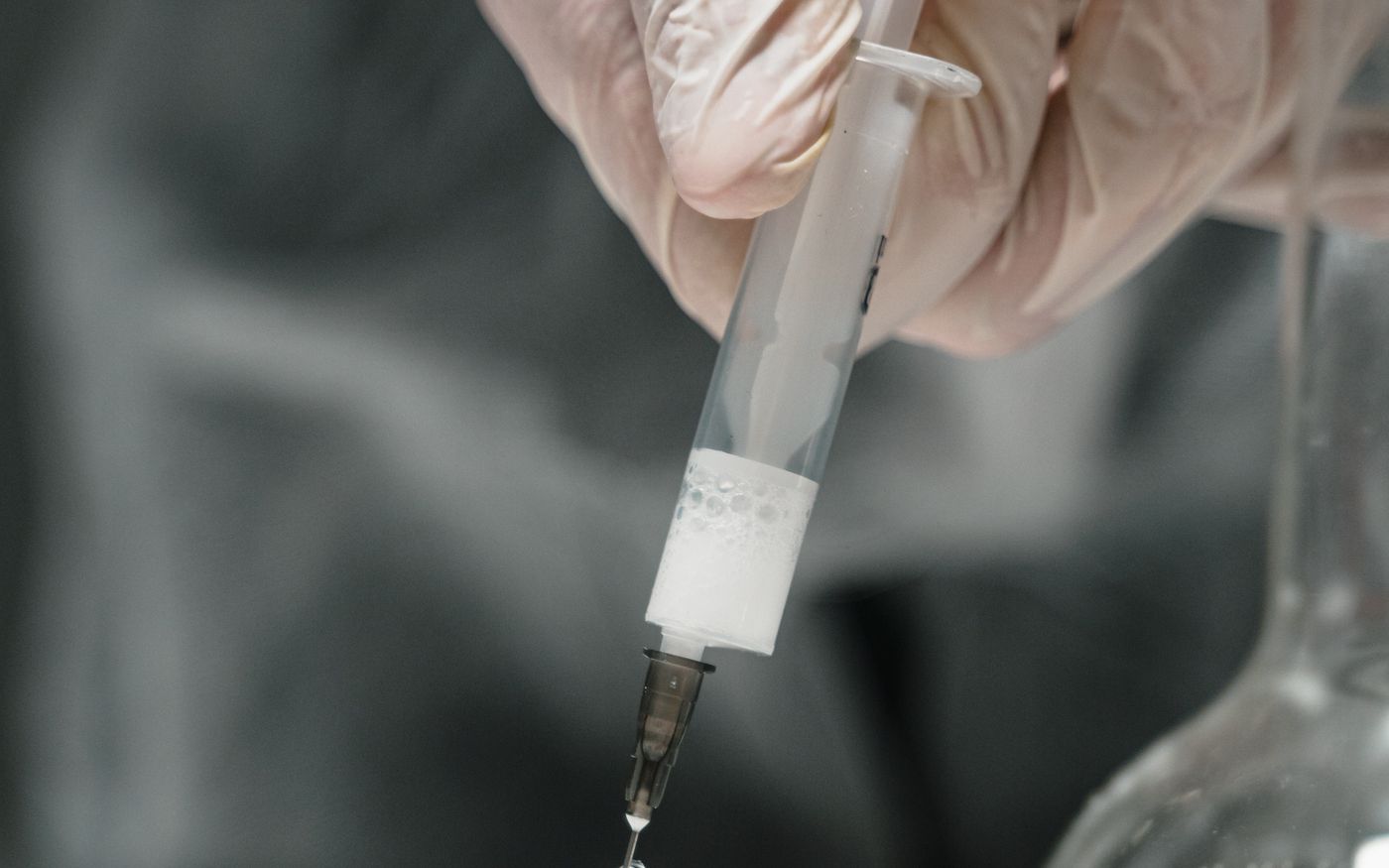
Nothing in this piece is exotic. Subcutaneous self-injection is taught to people managing diabetes, fertility treatment, multiple sclerosis and rheumatoid arthritis, and the technique is the same regardless of what is in the syringe.
What differs is that those patients get shown it by a nurse. So it is worth being precise about the parts that actually go wrong, and about one route that should not be chosen casually.
Subcutaneous, and why not intramuscular
Subcutaneous means into the fat layer between skin and muscle. Absorption is slower and steadier, the tissue is relatively forgiving, and this is the route used for essentially every compound discussed in this section.
Intramuscular is deeper, absorbs faster, and carries meaningfully more risk when self-administered. The documented harms are not theoretical: sciatic nerve injury from injections placed badly in the buttock, shoulder injury from deltoid injections placed too high, deeper abscesses when contamination occurs, and inadvertent intravascular injection.
I am not writing intramuscular landmarking here. Locating the ventrogluteal site and staying clear of the sciatic nerve is taught hands-on, by someone who can watch you do it, and a paragraph of text is a poor substitute.
Where subcutaneous injections go
Sites with reliable subcutaneous fat and no major vessels or nerves near the surface:
- Abdomen, staying at least two inches (about 5cm) clear of the navel. The largest usable area and the most consistent absorption.
- Outer thigh — the outer portion only. Avoid the inner thigh, where vessels and nerves sit closer to the surface.
- Back of the upper arm. Awkward to reach one-handed; easier if someone else is doing it.
- Upper outer buttock / flank.
Avoid scars, moles, bruises, broken or inflamed skin — and avoid any area that has become lumpy or thickened.
The problem the guides usually skip
Repeated injection into the same spot produces lipohypertrophy: firm fatty deposits under the skin. This is thoroughly documented in diabetes care and it has a nasty feedback loop.
Lipohypertrophic tissue has fewer nerve endings, so injecting there hurts less. People drift toward the comfortable spot without noticing why. But absorption from that tissue is erratic and reduced — which, in insulin users, is a recognised cause of unpredictable and unexplained blood glucose swings.
The lump is the warning. If an area has become firm or raised, stop using it and let it recover, which can take months.
Technique, step by step
- Clean the site with alcohol and let it dry. As with reconstitution, the drying is the disinfection — and wet alcohol carried into the puncture is what makes injections sting.
- Let the solution come toward room temperature. Cold liquid injected straight from the fridge stings considerably more. This is about the solution, not the skin.
- Pinch a fold if your subcutaneous layer is thin. With a short needle and adequate tissue, 90 degrees into a flat surface is fine. With little subcutaneous fat, lift a fold and go in at about 45 degrees so you stay out of muscle.
- Insert briskly. Slow, tentative insertion hurts more, not less — the discomfort is in the skin surface and hesitating prolongs it.
- Inject slowly, over roughly ten seconds. Fast injection distends the tissue and is a common cause of post-injection ache.
- Withdraw straight out, along the same line you went in.
- Apply gentle pressure. Do not massage.
That last point contradicts advice you will see often, so it is worth stating plainly: rubbing the site is not recommended. It increases local irritation and bruising and can make absorption less predictable rather than more even. Gentle pressure with a clean pad is the whole of the aftercare.
Aspiration — drawing back on the plunger to check for blood — is not recommended for subcutaneous injection. Guidance moved away from routine aspiration some years ago.
Needles
For subcutaneous use, 6-12mm length and 28-31 gauge covers almost everything. Higher gauge numbers mean thinner needles: more comfortable, slightly slower to push.
Insulin syringes with a fixed, non-detachable needle are convenient and have less dead space than a separate needle and barrel, so less solution is wasted. And, as ever: a new needle every single time, never shared with anyone.
Rotation, done systematically
- Keep consecutive injections at least an inch (2.5cm) apart.
- Do not return to the same specific spot within about a week.
- For daily use, that arithmetic requires several distinct areas in circulation, not one region used repeatedly.
- Write it down. Nobody remembers where they injected nine days ago, and the whole point is that lipohypertrophy develops before you notice it.
When to stop and get help
A little redness or a small bruise that settles within a day or two is ordinary. The following are not:
- Spreading redness, heat or hardness, especially with fever — possible cellulitis or abscess, needing antibiotics rather than observation.
- A lump that is painful, growing, or persists beyond a few days.
- Any systemic symptoms after an injection — see the red flags in Peptide Safety, Stated Honestly.
Sharps go into a proper sharps container. Not the bin.
What this article does not cover
What to inject, or how much. Technique is neutral — it is the same for insulin and for anything else — and knowing it protects you. The contents of the syringe are a medical decision, and the reasons this site does not print doses are set out in The Thousandfold Error.
Disclosure: Biohacker Life is published by the team behind Nalu Labs, which sells in this category. Weigh our coverage accordingly.
General information about injection technique, of the kind provided in standard patient education. Not medical advice, and not a protocol. Nothing here is a recommendation to obtain or self-administer any compound. Several substances discussed in this section are prescription-only or unapproved, and legality varies by jurisdiction. If you think you are having a medical emergency, contact emergency services.