Breathwork Beyond the Hype: What Slow Breathing Does to HRV
Strip away the branding and there is a specific, measurable, well-characterised physiological effect at roughly six breaths per minute.
Breathwork is sold with an enormous amount of packaging. Underneath it sits a narrow, replicable finding that is genuinely worth knowing.
Resonance frequency
Heart rate is not constant. It rises slightly on inhalation and falls on exhalation — respiratory sinus arrhythmia, mediated by the vagus nerve.
Separately, the baroreflex, which regulates blood pressure, operates with a characteristic delay that gives the cardiovascular system a natural oscillation of roughly ten seconds.
Breathe at about six breaths per minute — a ten-second cycle — and those two rhythms align. The result is a large increase in heart rate variability amplitude, visible immediately on any decent HRV monitor. This is the resonance frequency effect, and it is robust.
What the evidence supports
HRV biofeedback, which is resonance-frequency breathing with a display, has the strongest evidence in this space. Meta-analyses report moderate effects on self-reported stress and anxiety, with additional evidence in hypertension and some findings in depression. The trials are mostly small, and blinding a breathing intervention is close to impossible, so take effect sizes with caution.
Extended exhalation — making the out-breath longer than the in-breath — increases vagal tone acutely. The mechanism is straightforward and the acute effect is easy to demonstrate on yourself.
The physiological sigh — a double inhalation through the nose followed by a long exhalation — has decent support as a fast acute intervention for arousal, and it is what the body does spontaneously during recovery from distress.
What is oversold
Long-term trait change. Acute HRV shifts during a session are certain. Durable changes in resting HRV from breathing practice alone are much less well established, and resting HRV is dominated by fitness, sleep, alcohol and age.
Hyperventilation protocols. Tummo-style methods involving rounds of rapid breathing followed by breath holds produce dramatic subjective effects and measurable changes in adrenaline and blood pH. There is real published work here, including the well-known endotoxin study. There are also documented deaths from shallow-water blackout: hyperventilation suppresses the CO2 signal that tells you to breathe without extending how much oxygen you have.
Never do breath-hold work in or near water. This has killed experienced practitioners.
"Detoxification", "cellular oxygenation". In a healthy person breathing room air, arterial haemoglobin is already saturated at around 97-99%. You cannot meaningfully oxygenate further by breathing harder.
A practice worth ten minutes
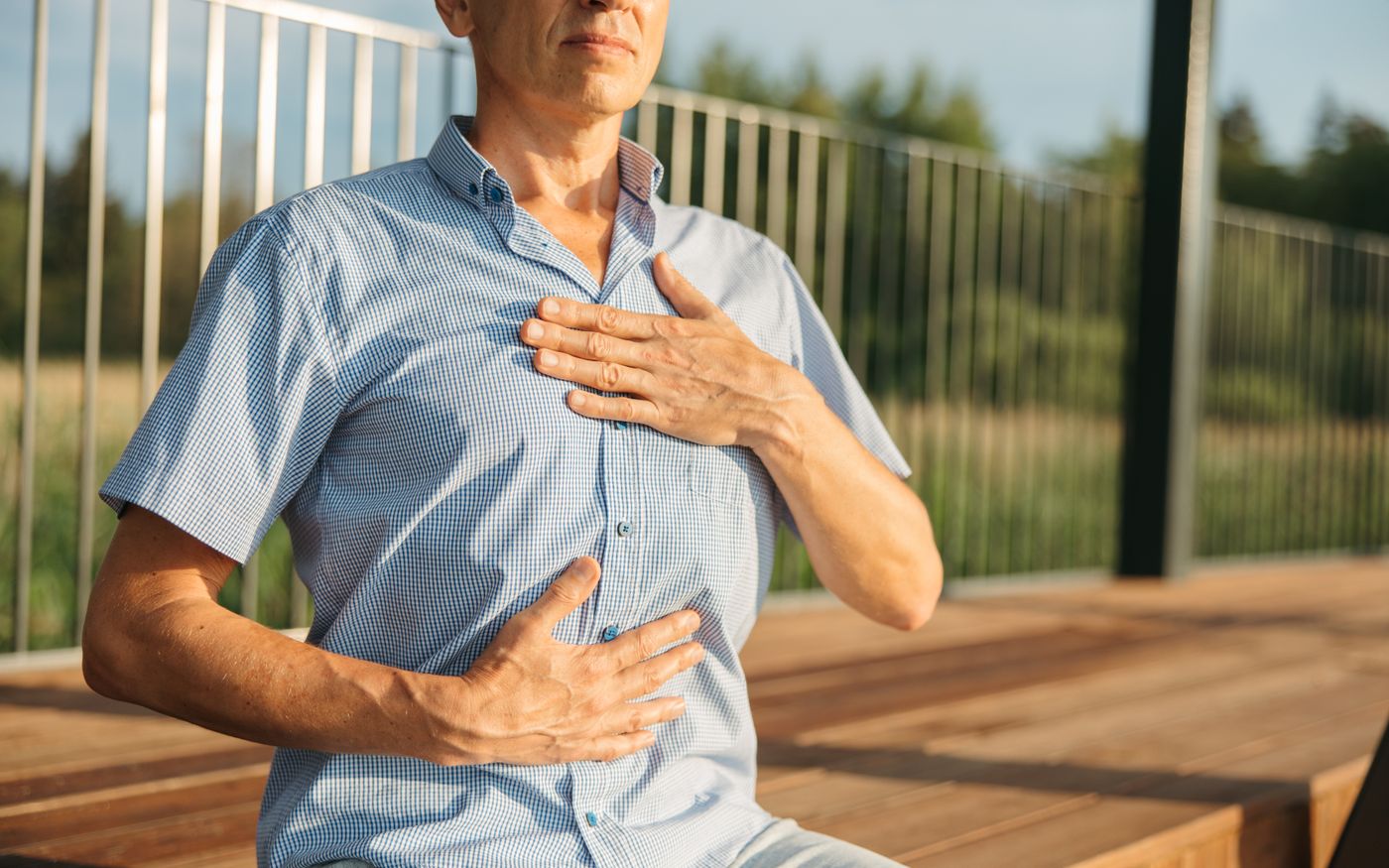
Sit. Breathe in for four seconds, out for six, through the nose. Ten minutes. That is a six-breath-per-minute cadence with an exhalation bias, which is the whole of the evidence-supported protocol.
No app subscription, no branded method, no retreat. The mechanism is a hundred-year-old piece of cardiovascular physiology and it works exactly as well without the marketing.
Not medical advice. Do not practise breath holds in water, and consult a clinician before intensive breathwork if you have cardiovascular or respiratory conditions, or are pregnant.