Blue Light Blockers: Sorting the Evidence From the Marketing
The photoreceptor biology is genuinely elegant. The consumer product built on top of it is a much weaker proposition than the packaging suggests.
Two claims travel together in the marketing for amber glasses, and they deserve to be separated, because one is on much firmer ground than the other.
Claim one: blue light in the evening suppresses melatonin and delays circadian phase. Claim two: wearing blue-blocking lenses in the evening meaningfully improves your sleep.
The first is well supported. The second is where things get thin.
The biology is real
In 2002 a third class of photoreceptor was characterised in the human retina — intrinsically photosensitive retinal ganglion cells, containing melanopsin, peaking in sensitivity around 480nm, in the blue part of the spectrum. These cells do not contribute much to image formation. They project to the suprachiasmatic nucleus and tell the circadian clock what time it is.
Light at that wavelength, in the evening, suppresses melatonin and shifts phase later. That is solid, replicated laboratory work.
The leap that does not hold
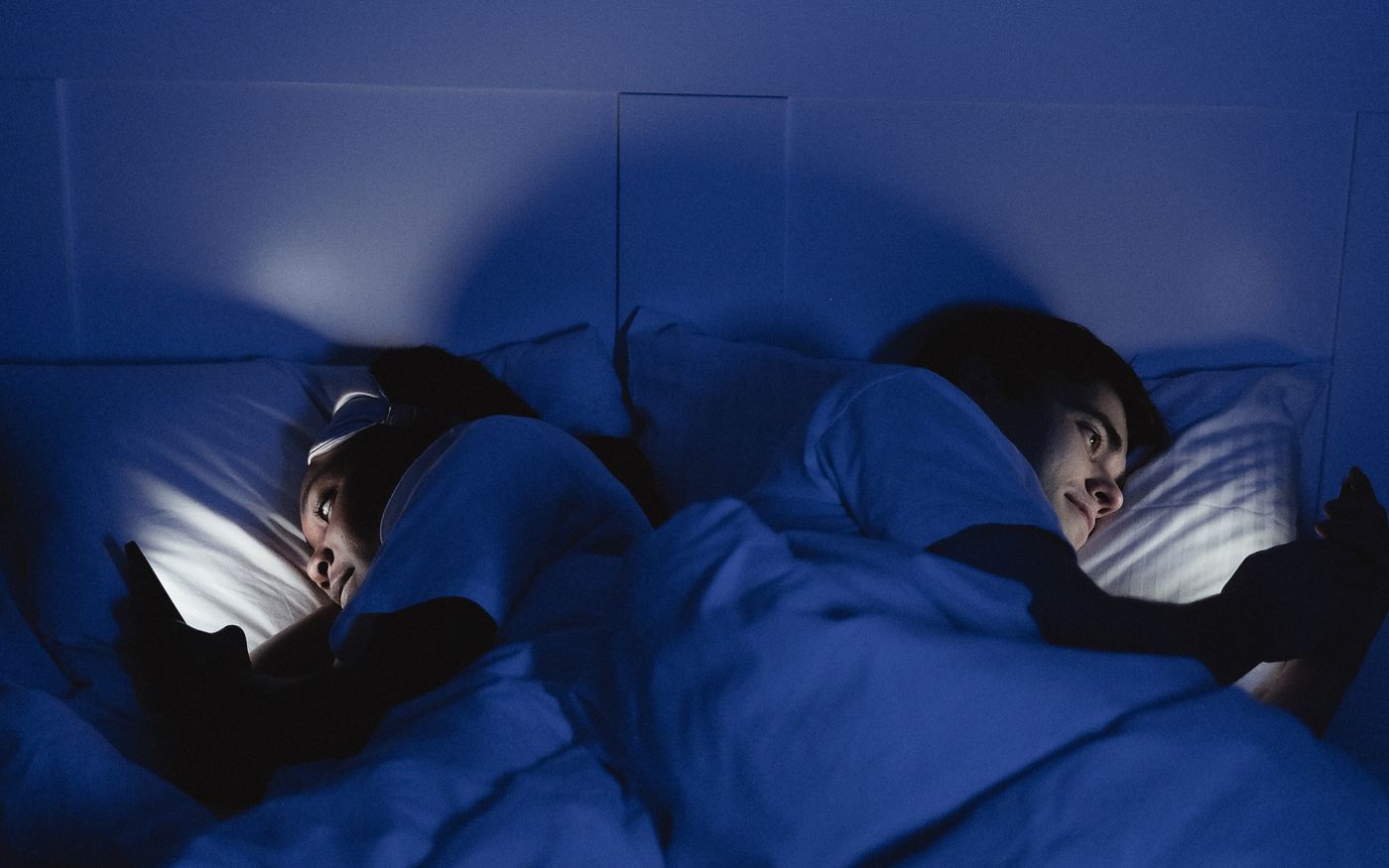
Where the argument weakens is the jump from blue light suppresses melatonin to your phone is destroying your sleep, buy these glasses.
The suppression studies that produce dramatic effects typically use light intensities well above what a phone at arm's length delivers. Melanopsin response is driven by intensity as much as by spectrum, and a screen is a dim source compared with a lit room — let alone daylight, which is orders of magnitude brighter than anything indoors.
Then there are the trials. Randomised studies of blue-blocking lenses in ordinary poor sleepers have produced a genuinely mixed picture: some report modest improvements in sleep onset, others find nothing distinguishable from placebo lenses. A 2023 Cochrane review looking at blue-light filtering spectacles found no clear evidence of benefit for eye strain or sleep quality, and noted that the trials were mostly small and short.
Effects in delayed sleep phase disorder and in shift workers look more promising than effects in the general population — which is what you would expect if the mechanism is real but the effect size in a typical evening is small.
What is probably happening
People who put on amber glasses at 9pm also, generally, dim the lights, stop working, and adopt something resembling a wind-down routine. The glasses function as a ritual boundary. That is a real benefit and it is not the benefit printed on the box.
Reasonable positions to hold
- If you already own a pair and feel they help, keep wearing them. The intervention is harmless and the placebo is doing useful work.
- Prioritise total light reduction over spectrum. Turning the overhead light off does more than filtering the blue out of a screen.
- If you are a shift worker or have a diagnosed circadian rhythm disorder, properly timed light management — including blocking — is a legitimate clinical tool, and worth doing with a clinician rather than a shopping cart.
- Do not expect glasses to offset a 1am bedtime. No lens tint compensates for insufficient time in bed.
The photoreceptor discovery was excellent science. It has been asked to carry a product category considerably heavier than it can bear.
Dr. Raghunathan is a clinical pharmacologist writing in a personal capacity. This article is general information, not medical advice.